The Green Walks project, funded by the Economic and Social Research Council and US National Academy of Medicine, aimed to encourage people to engage with green spaces for improved mental health. Initially, it focused on developing a tool to help people find green spaces within walking distance. However, through the development of a Green View Index in Cambridge, UK, the project found that the main barrier wasn’t distance but rather a lack of awareness of the green spaces that already existed. The project’s focus has since shifted to help people recognise the “green” surrounding them, even in urban environments, through photographic practices, artful interaction, and community engagement.
Why green space
The Covid-19 lockdowns showed how much access to green space matters for mental health, yet access in the UK is deeply unequal. Most people over 64, and most people from non-white backgrounds, do not believe they have green space within easy walking distance.

Approach
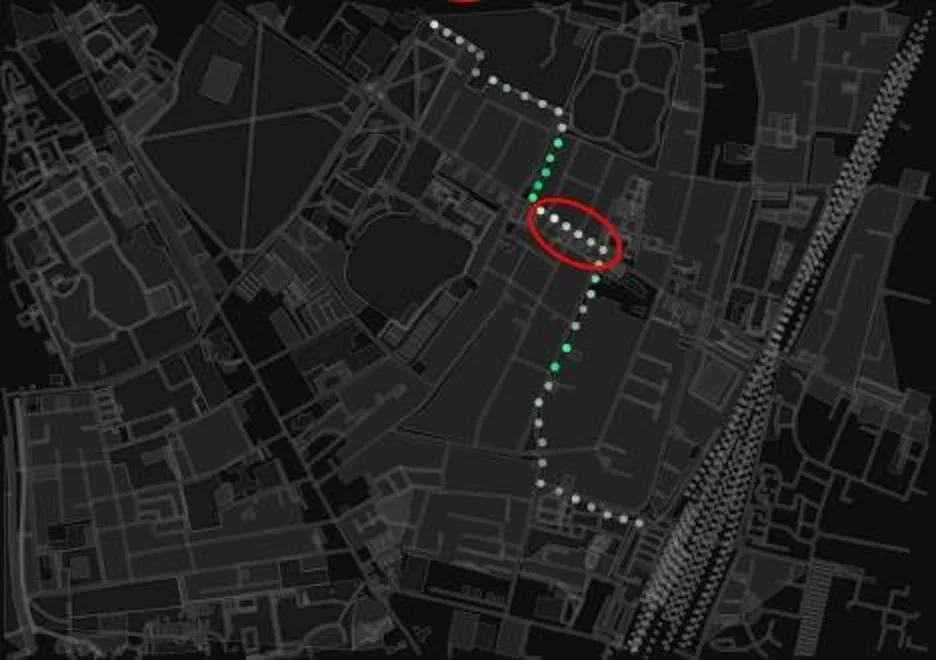
Green Walks set out to help people find green spaces near home, and to give them reasons to go out by noticing seasonal change, such as plants coming into bloom or birds on migration. The team built a green view database, using AI tools to analyse images from existing mapping platforms and calculate how much green is visible along each road.
From this database the project planned a web-based search interface and a mobile app, co-designed with users, to generate personalised walks to and from home through the streets with the highest green views. The app would guide walkers with spatialised audio, offer social accompaniment and quick access to help, and track progress through GPS, motion data and brief self-reported mental health check-ins.

A citizen-science element lets people contribute data from their walks, mark areas of interest and areas to avoid, and share community information about how local green spaces are used.
Funding and outputs
Funded by the ESRC and Zinc through the Healthy Ageing Catalyst awards, part of the Healthy Longevity Global Grand Challenge with the US National Academy of Medicine (ES/X006603/1, £50,350), with Kirk Woolford as principal investigator. The project led to the article “Green Walking: Artful Technologies for Natural Connection”, Leonardo, 2026.